Thursday, June 21, 2012

Six capital sins of writing and how BEFORE WATCHMEN commits them all.

1) Never insult writing, neither yours or anyone’s.


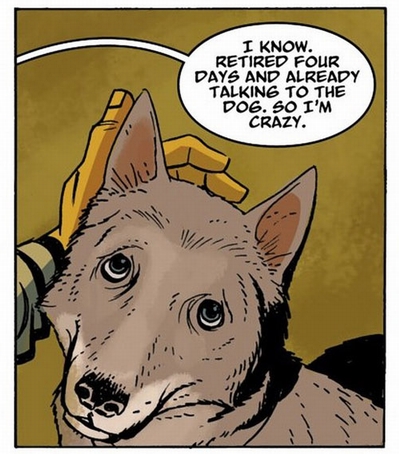
“I’ll just have to face the facts, girl, I’m no Tolstoi. Going for a philosophical end there isn’t going to work”  Before Watchmen: Minutemen #1 p.3

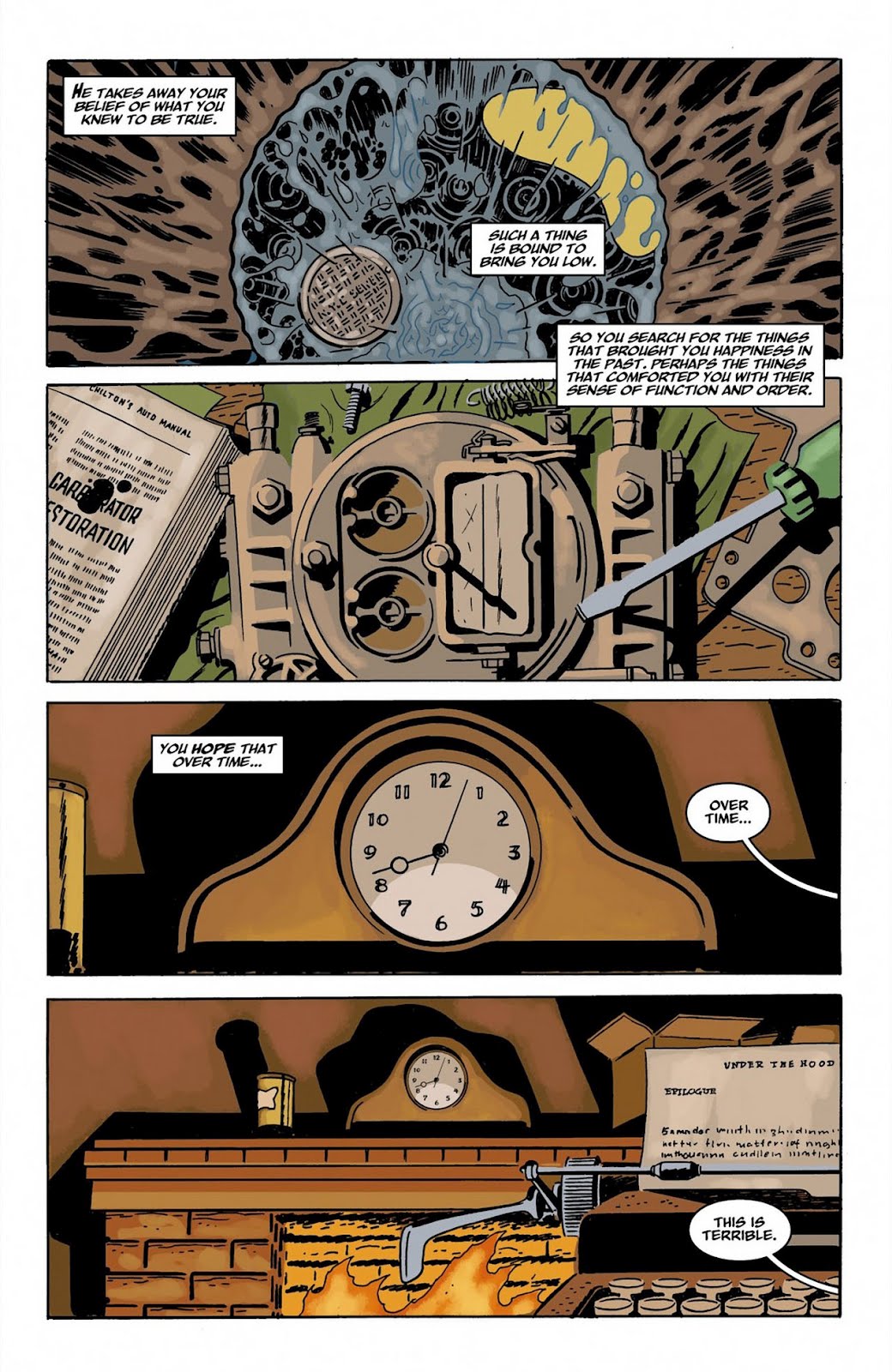
You may think this gives your writing humility, or in-universe it gives an excuse for a character to not demonstrate the exceptional writing skills he’s famous for, however it just shows poor penmanship. Disrespecting your own or a character’s literary voice weakens the author’s authority. The first page of any literary work is the opportunity for the author to establish authority, to convince the reader to stay and enjoy the story and this is achieved through two methods; be empathetic and appeal to the reader’s emotions or appeal to the intellect and hand out provoking thoughts. By saying: “This is terrible” (Op. cit p. 2) you just lose everything you gained.

2)You shall not hang lampshades


Writing, as any other craft, has conventions, these conventions are the unwritten contract you and the reader sign when the work is purchased or acquired, “I am going to tell you this story and here are the tools of the trade I am going to use” In visual arts, such as the comic-book, monologuing is accepted. Steve Ditko and John Romita Sr.’s Spider-Man continually monologues as he spins his web around New York City, John Byrne’s Superman monologues as he fights his way through War Machines in The Man of Steel miniseries, we have come to accept it. The original Watchmen always had an explanation in-universe for monologuing. Rorschach’s Journal, he was dictating to his own head and later sat down to write it, Doctor Manhattan’s watching the past and the future happen at the same time, Alan Moore used these conventions but somehow skipped the thought balloons relying on expressions drawn by Dave Gibbons,  both the words and visuals perfectly married.
In the hands of a much inferior writer whose only trick is: “look how aware I am of how ludicrous comic book conventions are” this becomes just that, a cheap trick for a quick laugh, that undermines the unspoken contract between creators and readers, made worse by the fact that monologuing is used in a straight way throughout the rest of the book.

3) Alternate Character interpretations belong to fanfiction, not in official releases (Brian Herbert’s Syndrome)


Derivative works have a very tough job, they come after a established property and while carrying their own goals they must still follow the original. The biggest perpetrators of this is Marvel and DC Comics, their properties have gone through dozens of creators while still trying to be recognizable. Chris Claremont's run on X-men for many has been the definitive interpretation of the characters, but after Claremont came much inferior writers who killed off the characters they didn’t like and resurrected the ones they liked., you cannot read Uncanny X-men as a novel, plots contradict themselves, characterization becomes poor and twists and turns are hard to keep track.
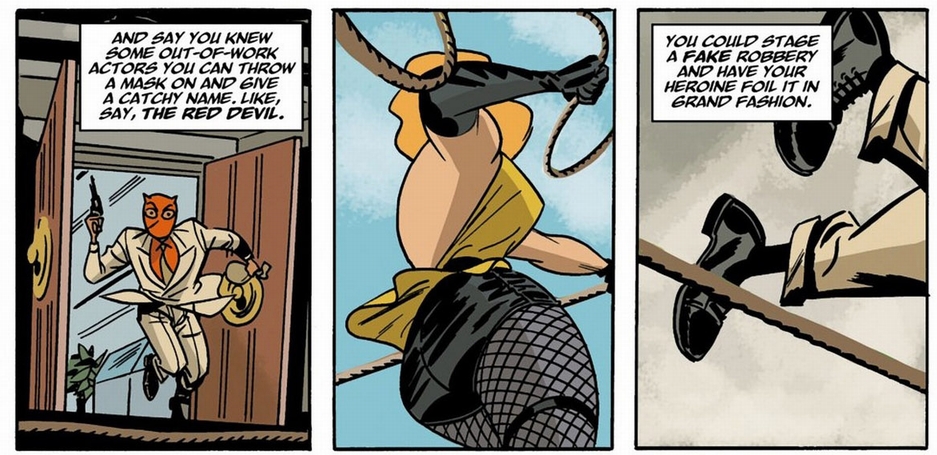
An inferior writer will always try to establish credibility by correcting or “improving” a character, he has always wanted or always though something and when given the writer’s reins, feels free to explore. This just weakens the character, The Silk Spectre is a respected superheroine with equal footing to the rest of the Minutemen and according to Darwyn Cooke she is just a “pretty face” throwing publicity stunts while her “kike ass”  (sic) husband and agent charges for her appearances.

4)You shall not use “Dark and Gritty”

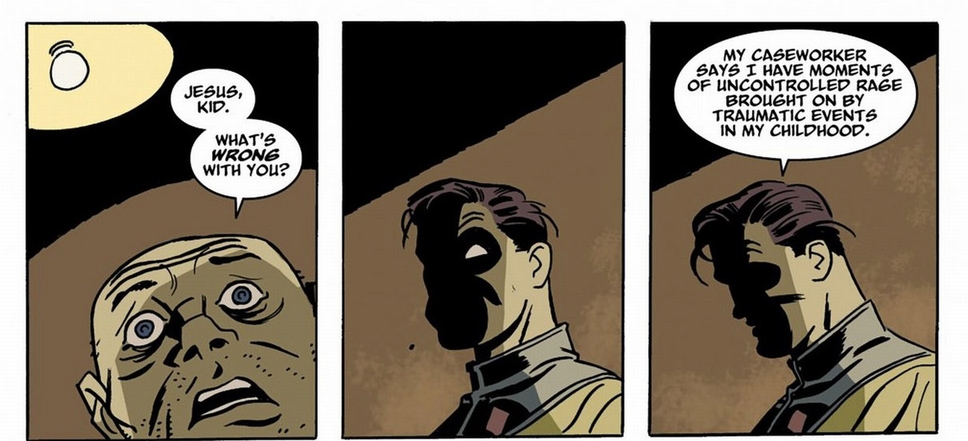
The Dark Age of Comic Books, brought upon Watchmen and Frank Miller’s Daredevil and The Dark Knight Returns began because artists wanted to copy that “Dark and Gritty” feel to the original works without understanding that it was a result of the deconstruction process. Deconstruction, in the case of Watchmen, meant exploring the consequences of having costumed adventurers running around. Before Watchmen not only feels like ANY other comic book, playing the superheroics straight, it gives The Comedian an artificial troubled past as a justification for his latter fall, while the original novel guides through that process and lets us gaze into what he has seen, and lets us in his gradual descent, Here, The Comedian was born broken and just recites psych-sounding nonsense. You never tell dark and gritty stories, you just tell stories.

5) Never give in to the temptation to justify one aspect of the source material that wasn’t intended to have any further explanation.

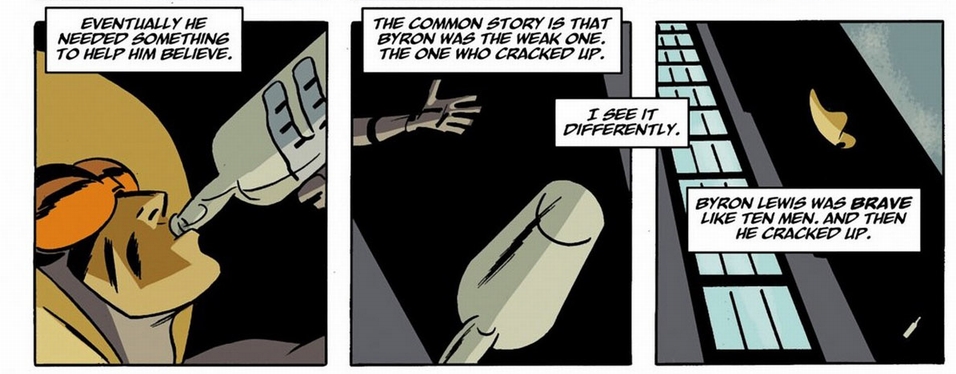
The original narrative of “Under The Hood” provides a laconic ending to the heyday of the Minutemen, every one of the smiling heroes who seemed larger-than-life (Except the too human Edward Blake, but that’s the central theme of the novel) have sad endings. In the case of Mothman he ends up in a mental asylum and is not given additional details, a moth unceremoniously burned to a crisp by a candle.
Before Watchmen provides a backstory and a justification to Mothman’s fall, he starts damaged and fragile, the process of rise and fall subverted entirely. It removes the counterpoint and the whole reason to have him as a character, these are details that, while expanding to the existing mythos, add nothing and detract from the overall mood of the piece. What you do not show is as important as to what you show, and sometimes, when showing monsters, the less you show the biggest and foreboding they are in the mind of the reader, details just dilute that effect.

6)Never rely in the power of words themselves, specially for shock value.

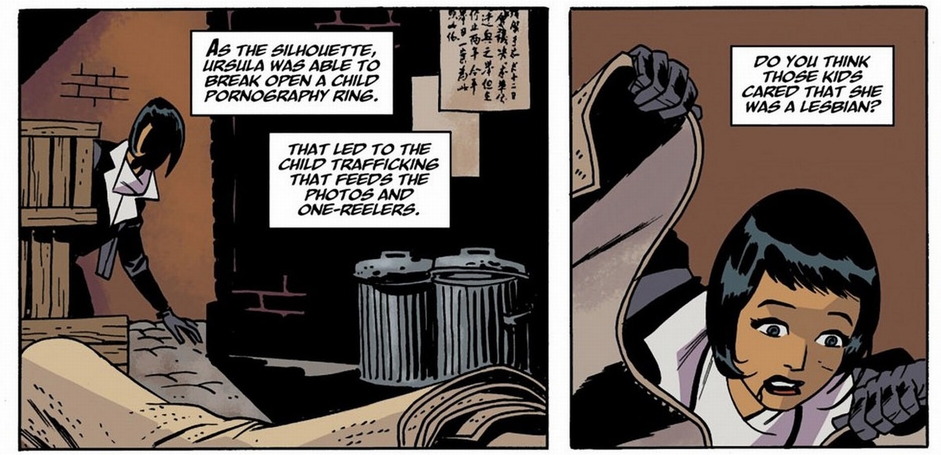
Lisbeth Salander in Stieg Larsson’s Millenium series is a bisexual as a thematic convention to show her detachment to humanity itself and spiraling alienation, characters in Alison Bechdel’s stories are lesbians because Bechdel herself is a lesbian and it is an exploration of her own life, trying to make sense of it, Why is the Silhouette a lesbian?
It’s part of the overall theme of the Minutemen in general, they really are mystery men. we know nothing about their personal lives, their public personas are empty masks, filled by no-ones, it’s because their deaths that we got to peek a little into their lives. The idea that the comic book reader is intimate with the masked hero’s real identity is subverted for the first time in the extracts of Under The Hood, the revolutionary ideas is that not even a fellow hero knew anything about these men and women of mystery.
For Darwin Cooke The Silhouette is a lesbian because she was in the source material, and doesn’t show it, gives some kind of pseudoexistential question, he fails to do a basic writer’s workshop's advice: Show, don’t tell. And overall, he speaks about a “Child pornography ring” (for the year of the story a child prostitution ring is more accurate, the child pornography is a more contemporary fear) that we see nothing about. It’s more than lazy storytelling, it just becomes name-dropping, a divorce or the words and images and that is the ultimate sin in sequential art

Thursday, November 24, 2011

Óscar González Loyo - ODIO

El odio es el peor amo.

Ha pasado un año desde que escribía tres veces por semana acerca de las tiras de Estudio Ka-Boom y de aquel entonces hasta ahora las cosas han ido de mal en peor, semana tras semana han aparecido nuevas tiras con exactamente los mismos tres mensajes, de los cuales ya hemos hablado en el pasado:

1) "Hay que ignorar los ataques que nos hacen los demás" vs. "dedico semana tras semana de mi trabajo personal y el talento de mi estudio para responder a quienes me atacan." (Disonancia cognitiva)

2) "Quienes no piensan o aprecian como yo, o comparten mis valores y mis prejuicios están mal; no son inteligentes, tienen la mente cerrada o alguna fuerza externa identificada con mis enemigos los está manipulando" (Racionalización)

3) "El pasado es el paraíso y el futuro está condenado" (Filtro de la Nostalgia)

No vamos a regresar a elaborar esos puntos, vamos a hablar de algo distinto, precisamente del odio.

Oscar González Loyo ha construido alrededor de si un universo complejo con ideas y valores específicos con el propósito de divorciarse de la realidad objetiva, de la cual también hemos hablado. La "realidad" personal, en cuanto más alejada esté de la realidad objetiva es más frágil, toma mucho más esfuerzo reconciliarla con las observaciones del mundo real, básicamente requiere cerrar los ojos y caminar a gatas.

¿Qué es el odio? El odio es el rechazo a todo aquello que puede destruir el castillo de cartas que insistimos en armar a nuestro alrededor, el cual pretendemos que nos defienda de una realidad objetiva que percibimos como hostil y peligrosa. Creemos que nuestro "capullo" es un tanque de oxígeno y sin él nos ahogaremos, el odio es un reflejo, es una expresión visceral del miedo a morir.

Pero eso lo hacemos todos.

Piensa en aquello o en quienes odias, ahora piensa cómo eso compromete o amenaza lo que te es valioso o la manera en la que vives, lo más difícil es decidir si esas amenazas son justificadas o no.

Odiamos siempre a aquel que nos señala nuestros errores, quizá mucho tiempo después nos podamos dar cuenta que sus intenciones eran nobles y éramos nosotros quienes vivíamos en un error. Odiamos todo aquello que asociamos con el "otro", lo que pertenece a esa realidad ajena, ideas, música que representa ideales con los cuales no simpatizamos, o aquellos en los cuales dejamos de creer y abandonamos hace mucho tiempo.Odiamos aquello que amenaza con regresarnos a un momento pasado incómodo, culpa por asociación. Odiamos aquellas ideas las cuales para nosotros en nuestra lógica interna son falsas, pero que resultan atractivas para otros, y los odiamos por ellos, doiamos sentirnos "rebaño" y buscamos ser únicos, ser líderes en vez de seguidores.

El más grande odio es a aquel que nos recuerda, es más, que nos confirma que no somos especiales, ni únicos, ni listos, ni divertidos, en resumen, que nos muestra que somos una persona más entre miles de millones.

Tuesday, November 15, 2011

¿Porqué sales de tu casa en pijama? --Superheroica, Parte 1


Esta es la primera parte de una serie de reflexiones en la teoría y práctica del superhéroe, analizando los elementos inherentes a su iconografía y mitología, esta semana hablaremos del traje y de la importancia de la identidad secreta.

Hasta hace poco no me había percatado de lo extraño que es el traje del Hombre Araña. ¿Porqué es rojo y azul? ¿Porqué las partes rojas tienen un patrón de telaraña? ¿Porqué tiene el símbolo en la espalda?, ¿porqué tiene esa especie de alerones bajo  los brazos? (los cuales son inconsistentes dependiendo si el artista decide dibujarlos o no)

Un amigo simplemente me dijo; "Porque es un traje diseñado para un luchador, originalmente Peter no deseaba ser superhéroe sino volverse rico en el ring" lo cual tiene sentido en los cómics originales pero no en la película, donde usa un traje improvisado.

En contexto tiene sentido que Peter Parker desee tener una identidad secreta, pues a) es un estudiante que vive con sus tíos, no tiene recursos para protegerlos y la anonimidad evita que algún villano desee dañar a la Tia May (lo cual a pesar de tener identidad secreta, sucede una y otra vez, hasta en la absurda historia donde Otto Octavius, el Doctor Pulpo, se casa con la Tía May) y b) un disfraz que oculta toda su piel permite que en el Nueva York de los 60's en plena lucha por los derechos civiles no se sepa si es blanco o negro, y así poder facilitar que jóvenes de todas las razas se identifiquen con él.

Sin embargo el traje negro de la década de los ochentas es mucho mejor, un diseño más simple, un ícono reconocible, una mejor capacidad para confundirse con su entorno, los cómics de la época explotaban el nuevo traje y la gravedad que lo acompañaba en el excelente arco escrito por Peter David "La Muerte de Jean DeWolff" y en "La Última Cacería de Kraven" de J. M. DeMatteis, con tintes de horror. Este Hombre Araña no se ve fuera de lugar en historias más realistas, es una verdadera lástima que haya regresado al traje original y a premisas más de ciencia ficción, porque resultaba un cambio refrescante.

Si vamos a hablar de identidades secretas la primera que viene a la mente es Clark Kent/Superman. Sin embargo es un caso diferente, Superman no usa máscara, de alguna manera Clark Kent es quien usa la máscara, es casi un cliché burlarse de un par de lentes como una manera efectiva de esconder una identidad, especialmente cuando Luisa Lane pasó gran parte de la década de los 60's tratando de descubrir la identidad secreta de Supermán (además de tratar de casarse con él.)

Sin embargo la clave la dió John Byrne en "Man of Steel" la miniserie que definió al personaje para la era post-Watchmen, Superman no usa máscara porque la gente no sabe que tiene identidad secreta, es un ser tan poderoso y más allá de lo humano que es inconcebible que tenga un trabajo y camine entre nosotros, especialmente cuando todos los días lo vemos salvando a cosmonautas en la estratósfera y previniendo desastres en Asia cuando pensamos que Clark Kent simplemente se distrajo en el camino al Starbucks.

Es por eso que el Supermán de Christopher Reeve es la mejor interpretación del personaje fuera del comic (que es también posible que haya influenciado a John Byrne). En la película Chris Reeve interpreta a ambos de manera completamente distinta, maneras de hablar y de lenguaje corporal opuestas, Clark Kent es torpe e inseguro mientras Supermán tiene un aire casi divino. Nadie creería que el torpe Gutierritos de la oficina es un semidiós disfrazado a pesar que se parezcan físicamente, de la misma manera que nadie cree que Zooey Deschanel es en realidad Katy Perry.

Hablando de superhéroes sin máscara uno de los clásicos es el primer Flash, Jay Garrick:

Quien no usa máscara pero aprovecha su supervelocidad para volver su rostro una mancha borrosa para quien intenta verlo o fotografiarlo, ¿Porque ni Barry Allen ni Wally West usan el mismo truco y deben de defender sus identidades secretas?

 Siguiendo la línea de DC me parece absurdo que ni Guy Gardner ni John Stewart usen antifaz pero Hal Jordan sí.

 El superhéroe usa máscara más que por alguna razón esencial a su origen porque se supone que así debe ser. y luego terminamos con esto:
Un cuello sin utilidad práctica alguna, una máscara  moldeada que no cubre ninguna característica facial importante, y lo peor de todo, si mides 4.6 metros máscara o no máscara todo el mundo te reconocerá.


La identidad secreta, a lo largo de los años, ha dejado de justificarse de manera lógica y ha terminado por ser una convención autoimpuesta, y no basta con tan solo ocultar la identidad, para eso bastaría un pasamontañas y un traje completamente negro, lo cual visualmente resulta demasiado aburrido, como Daredevil en la película The Trial of the Incredible Hulk.


El uniforme de superhéroe da una clave visual originaria en los días de la publicación en tres colores y matriz de puntos, los héroes por lo regular son colores primarios y brillantes, mientras los villanos son colores secundarios tendiendo a oscuros.

Quizá por eso el traje negro del Hombre Araña fue reasignado para crear a Venom, un héroe mayormente oscuro provoca desconfianza, es la misma razón por la cual los colores de Batman fueron paulatinamente más brillantes con los años, de capa y máscara negra en sus orígenes a azul primario en los 60's.

¿Porqué los superhéroes tienen una insignia prominente en su pecho? ¿Para ser más reconocibles?
Sería fácil responder que es cuestión de mercadotecnia, hasta que nos damos cuenta que los superhéroes de Marvel carecen de insignias. Seguro, hay una insignia de los Hombres X que usan casi todos sus miembros en el cinturón, pero no insignias individuales, la única con insignia es Jean Grey en su traje de Fénix, el Hombre Araña tiene una araña en el pecho, pero su forma ha variado demasiado con el paso de los años y dependiendo del artista, el Hombre de Hierro no tiene insignia, es el generador de su corazón que le da poder a su traje, ni la estrella en el pecho ni la A en la frente del Capitán América son sus símbolos, es más reconocible por el escudo. Por parte de Image sólo Spawn tiene insignia y son los botones que conectan su capa. En DC nos damos cuenta que la gran mayoría tampoco tiene símbolos, ni Flecha Verde, ni Canario Negro, ni Zatanna, ni los miembros de los Jóvenes Titanes, ni los Outsiders (Sólo Geoforce) ni Infinity Inc, ni la mayoría de la Legión de Superhéroes y menos la gran mayoría de los villanos. Los héroes de DC de la lista A tienen insignias.

Quizá un gran cambio que pasó inadvertido fue cuando Neil Gaiman en Miracleman: The Silver Age #1 decide quitarle la insignia al personaje titular, comprende que no es ni parte integral de la mitología y que en verdad no cumple propósito útil alguno.

Regresando al traje, ¿porqué spándex? en el caso del Hombre Araña es comprensible, necesita el traje más ligero posible para aprovechar su poder de trepar paredes, ya vimos que el diseño tiene lógica tomando en cuenta su origen, pero ¿cómo podemos explicar esto?

En las historias imaginarias de What if? diferentes personas son mordidas por una araña radiactiva, lo cual inevitablemente resulta en que ganen los poderes del Hombre Araña, pero ¿porqué todos terminan usando una variación del diseño de su traje si sus circunstancias son completamente distintas?

Batman tiene una razón para vestirse de murciélago y combatir el crimen, vengar la muerte de sus padres así como ser el último héroe del pulp de los 30's y 40's que incluye a The Shadow, The Spider, Doc Savage, The Black Bat, Arséne Lupin, entre muchos otros.

Otros héroes tienen razones utilitarias, los Cuatro Fantásticos usan trajes hechos con fibras inventadas por Reed Richards que resisten y se amoldan a sus poderes (justificación que se va por la ventana cuando los vemos usando sus poderes en traje de civil sin consecuencias aparentes. Johnny Storm debe gastar una fortuna en ropa), Flash (según la serie de TV de los 80's) usa un traje resistente a la increíble fricción generada por su hipervelocidad. Linterna Verde simplemente usa el uniforme de la Corporación de Linterna Verde como todos su integrantes en distintas partes del universo, El Capitán América (explicado en la película) está vestido así para convertirlo en un símbolo que inspira a las tropas, Thor usa su ropa de todos los días en Asgard, El Capitán Maravilla usa ese traje porque es el campeón del mago Shazam.

Los Hombres X son un caso interesante, porque en su primera aparición todos usaban el mismo traje, en los 70's empezaron a usar trajes individuales, pero en el siglo XXI ya todos han abandonado el spándex para usar cuero o ropa más casual. Wolverine tenía un traje que desde los 80's ha usado o dejado de usar hasta que alguien se dio cuenta que no tiene identidad secreta y simplemente ya no usa, en ninguna de las películas usa máscara.

En mi investigación encontré esta genial imagen:


Aún en ropa común y corriente los elementos que hacen único a cada miembro de los X-men existen en estos diseños, los mutantes en realidad no tienen identidades secretas, ni Rogue, Coloso, Tormenta, Jubilee, Gambit,  usan máscara porque no tienen seres queridos más allá de otros mutantes,

En conclusión, ni la identidad secreta ni un disfraz son elementos necesarios en la mitología del superhéroe, a base de repetir fórmulas estas convenciones se han vuelto cánon al pasar de los años, y únicamente justificando o deconstruyendo estos elementos se puede revitalizar un género de más de setenta años.
Y no tener que sufrir aberraciones como el Capitán Ultra.

La siguiente semana hablaremos de la dicotomía del bien contra el mal, Superhéroes contra Supervillanos.


Wednesday, October 19, 2011

formspring.me

Ask me anything, keep it smart and not trivial. http://www.formspring.me/caugustovaldes

Wednesday, October 12, 2011

Ten reasons the old World of Darkness sucked.

I have been playing in White Wolf's World of Darkness for almost 20 years, I was amazed at the complex mythology and Gothic-horror aesthetics, we played Saturday after Saturday and spent hours upon hours debating the finer minutiae of the philosophical implications.

It was until the release of the New World of Darkness and the added perspective of the passing of the years that now, in hindsight, I can finally see the not-so-finer points for what they are. Utter crap.

10) The Daughters of Cacophony and other useless and idiotic bloodlines.

DeviantArt, what would I do without you?
Back in the Vampire Player's Guide, three bloodlines were provided as an example of how Storytellers were encouraged to create their own to add mystery and give a flavor of exoticism, the Salubri, meant to add a previously unexplained hole in the mythology, the Samedi, meant to explore vampires around a putrefaction motif and The aforementioned Daughters of Cacophony, built around their discipline, Melpominee, based on voice powers.

Back from the beginning they were meant to be just examples, as lots of emphasis was placed on the mystery aspect of the game, Montreal by Night introduced Hengyeyokai and Gaki as examples of mysterious creatures from distant lands but no backstory was given, so players would always be on their guard, as the night was a scary and unknown place.

As years passed and more and more supplements were published, that mystery diluted in an ocean of information. All of the sudden troupes and storytellers had more info to sink their metaphorical teeth in, supplements as the much vilified Dirty Secrets of the Black Hand gave us the Nagaraja (flesh eating vampires with necromantic powers) and the True Brujah (a former clan of emotionless masters of time, whose backstory retconned the fact that The Brujah were a legitimate clan of Caine). Said bloodlines had that "Monster of the Week" flavor, that usually meant that when a new supplement was published a player or a storyteller would feel the utter necessity to use the information contained therein, that usually provided an unrevealed clue, but more often, show that there was nothing planned and authors usually did not check with each other on the metaplot.

The Daughters of Cacophony and the rest of the bloodlines lack exactly what the original seven clans had, a foot in Vampire myth. You could exemplify the original seven with movies (Brujah with The Lost Boys, Ventrue and Toreador with Interview with a Vampire...) Bloodlines just didn't feel like vampires at all, just creatures with a cool power.

9) The Malkavian were just an excuse for players to act retarded.
Who's the Malkavian in the picture? The guy being tortured or the girl with the bloody brush and impractical pose?

The concept of the Malkavian clan is pretty awesome, vampires who are insane, not Angelina Jolie in Girl, Interrupted crazy, but homicidal maniac axe-wielding crazy, monsters with a very elaborate and incomprehensible method in their madness, truly the predator that would kill you just because the voice in her head happened to speak when you were on your way to the Succubus' Club. In theory they make for great assets in their game, if the Storyteller played one you would never know how to react, that level of uncertainty and danger added a great unpredictable atmosphere to the game.

Sadly, there was simply no guide for players on how to act upon this madness, and they relied on Hollywood stereotypes that quickly deformed into just plain shenanigans and pranks all around.

Instead of helping, the supplements made it worse, the introduction of the Discipline Dementation in the First Edition Player's Guide to the Sabbat made not only possible for the Malkavian player to act all crazy, but turn others crazy as well. the 3rd Edition Corebook made Dementation the defacto clan discipline, nonetheless, and Clanbook: Malkavian, sometimes illustrated with crayons and full of non-sequitur humor made this madness the OFFICIAL way of playing a Malkavian.

A mediocre Malkavian player usually mean that the carefully planned atmosphere would just go away at that player's whim, nothing would stop her from applying her Dementation powers to every Non-Player Character, ruining the storyteller's plans.

8) Kindred of the East is simply impossible to play.
We are Chinese even if you don't please.
Every game had special energy to use and a negative trait, while Vampire had generation, blood pool and Humanity,  Kindred of the East had Yin Chi, Yang Chi, Hun, P'o and Demon Chi, you were supposed to act out when you had more Yin Chi by being detached and cold and when you had more Yang Chi by being emotional and angry, and the P'o aspect was something like the beast but with a voice that plotted against you, the Hun was the higher soul, and somehow, in addition to interacting with others, you had to act out this inner struggle.

The supplements didn't help at all, the corebook made the Dharmas (the "clans", but more like paths of enlightenment) look like some pseudoeastern new-agey spirituality bullcrap, while some art made it look like a John Woo action movie while other made it look like anime. The fact that Eastern Culture is virtually unknown and misunderstood by all but enthusiasts and scholars made that players were acting insultingly inaccurate Asian people. The Supplement Blood and Silk, (Kindred of the East Dark Ages) while delightful to read, was a challenge to play unless you happened to be knowledgeable in the subject or a historian.

7)Weaknesses that weren't.
Bad Photoshop is not a weakness, but it should be.

Lasombra don't reflect in mirrors and don't appear in surveillance equipment and can't be photographed. No, that's not a superpower, that was supposed to be their weakness. Weaknesses were supposed to add a frailty to the character, something that reminded the character of the curse of Caine. In real gameplay, they were either underplayed, ignored o used as an excuse to annoy a particular player. Tremere really didn't have any weakness, just be careful when they were around their elders and they lived in Vienna, Brujah were quick to frenzy but that never really bothered anyone, Giovanni dealt double damage with their bites but as utter inhuman monsters they couldn't care less.

Usually this meant that the newbie who chose a Ventrue would be in the receiving end of the stick, as the prey exclusion weakness is one of the few that really impair the character.

6) Both Vampire: The Masquerade and Demon: The Fallen implied that Christianity is true and all other religious worldviews wrong.

Even though Leviathan is a sea creature. #fail
As Mage: The Ascension is a postmodernist wet dream where all paradigms and origin myths happened, the opposite is true for Vampire: The Masquerade, the first game had a Gothic romance quality to it, vampires are cursed by God and are the progeny of Caine, who slew his brother out of love, not jealousy, and since then he has been damned to drink blood and eat ashes. That makes for great stories with a unique feel, a post-Byronian antiheroica.

However, when the following gamelines appeared and tried to cram everything in a shared universe this idea appeared more and more ludicrous, how does the biblical story of Caine match with the Wyld-Weaver-Wyrm cosmology? With the the postmodern porn of Mage: The Ascension?
The mystery aspect of Vampire is somehow diluted when there are ancient vampires crawling around, talking about elders who lived in the City of Nod and who personally met the Children of Caine, everything is worse when Caine himself appears in the Gehenna supplement, and every story addresses that story as true.

Only two supplements, Kindred of the Ebony Kingdom and Clanbook: Followers of Set Revised, offers an alternative creation myth, but it's quickly dismissed as an alternative interpretation of the same. Part of the appeal of Demon: The Fallen is that the player characters were actually there when everything was created by the God of Abraham. If we have beings who have actual evidence of the seven days of creation and who can corroborate all the stories in the Bible, why are there non-Abrahmic religions? The in-universe explanations are naïve and shortsighted at best, even worse, there shouldn't be non-Christian vampires.

This faux-pas were one of the first things that Vampire:The Requiem set right, no generations tracing back to Caine and there are different sects with wildly different creation myths who do not see eye-to-eye, restoring a sense of mystery to the atmosphere. The Masquerade is Christian, the Requiem is Agnostic.


5) Coming to think of it, The Technocracy was right all the time in Mage: The Ascension
Now with 20% more straps

Mage: The Ascension has the best magic system ever. Period. No bulky spellbooks, no components for rituals, basically, you had your particular flavor of magic, your preferred focus, your paradigm. The cosmology was really interesting and it predated The Matrix for many years, basically, you shaped reality and reality had a tendency to dislike being shaped, hence the backlash called Paradox.

The traditions each had a very distinct flavor and any player could easily get the feel of how tradition specific paradigms worked, not only spell based magic and conjuring from the Order or Hermes or martial arts and eastern mysticism from the Akashic Brotherhood, but mad science fiction contraptions from the Sons of Aether and virtual reality and cyberspace from the Virtual Adepts, magic was an easy comcept to grasp and a wonderland to explore and master.

Enter the designated villains, the Technocracy; who had a static and cold vision on how Reality should be shaped, no room for the old magic and conjuring. Basically, they wanted to exterminate all fantasy and superstition from the world.

Then again, why is that a bad thing? The message in the first two editions of Mage seemed to embrace superstition and magical thinking as more valid than science and critical thinking, the basic premise, that reality depends on observation and is formed by a consensus, is postmodernist bullcrap, how can two persons which worldviews are radically different be able to work together? Later editions entered conflict between traditions, but that only exacerbates the problem. It takes a lot of cognitive dissonance to work with someone who heals through the now debunked model of humor imbalance while you believe that sickness is caused by the sins of the flesh, at least the Technocratic Union had a unified and non conflicting worldview.

The Technocracy had the cyborgs (Iteration X), the bionic implants, the clones (Progenitors), the holograms and the mind enhancing drugs (NWO) finance and money (The Syndicate), but most important of all, the spaceships!!! (Void Engineers), why did the alleged villains have all the cool stuff while the traditions had herbs and dancing?

Later supplements appointed the Technocracy as the ones who defended reality against the Nephandi (Devil worshipping mages) and Marauders (chaotic deranged mages) and little by little they began portraying them in a positive light, culminating in Technocracy: A Player's Guide, and in Mage: The Sorcerer's Crusade, the Fathers of the Technocratic Union; The Order of Reason, was portrayed not only positively, but as heroic in their own right.


4) This Guy
Guess my decade!!!


"Crossover" characters are the wet cream of power players, the ones who play not to tell a story, but to win points like in a  videogame. The same old story, in D&D you could go into the forest to slay squirrels and get experience points in order to level up and get more spells.

It was the supplement Under a Blood Red Moon for Werewolf: The Apocalypse that introduced the concept of Abominations; vampire werewolves. In such supplement they were meant to instill a sense of dread and tragedy, they are even described as forever alone.


The same supplement discourages players from creating one, albeit powerful they have the worst of both worlds. they cannot regenerate (this is the first thing that power players choose to ignore), can't regain gnosis, are attacked on sight by spirits, cannot learn new gifts and are hopelessly blood bound to sadistic and deranged masters.

Enter The Chaos Factor , a supplement for Mage: The Ascension with an epic scope. a crossover blockbuster that introduced a new and powerful villain that would prove to be a challenge to all the published games, a villain that would join vampires, mages and werewolves together, Samuel Haight, a very powerful ghoul with vampire powers, werewolf powers and access to both sorcery and true magic. Not only did he have none of the disadvantages of abominations, but none of the weaknesses. The real issue was that all the themes and moods of the original games were subverted for a shoot 'em up scenario, no introspection, no personal horror, just search and destroy.

This was said about him in the White Wolf forums;

In short, he is the written representation of almost everything wrong with
the bad gamers out there that make the hobby so painful for us on
occasion. He is one man, who wanted every 'kwel powerz' he could get,
for no other reason than his misanthropic desire for revenge against a
society for no other reason than they were not the society he wanted.
---Operations

The attempt to create a memorable villain resulted in a failed experiment, crossovers rob the charm of the individual lines rather than enrich them and scenarios such as this, while tangentially appropriate for Werewolf: The Apocalypse seemed strange and forced in the other lines.

You simply cannot have a game for mature players that indulges in teenage angst-ridden Liefieldian fantasies.

3) Werewolf: The Apocalypse is basically a caricature of both environmentalists and religious fundamentalists.
Level 2 Ragabash gift: Floating glasses

Werewolf: The Apocalypse was a very unfortunate follow-up to Vampire:The Masquerade, while the whole personal horror embodied by the phrase Monsters we are, lest monsters we become made possible for tales of shades of grey morality and question what being human is, W:tA lived in a comic-book moral-absolutist Manichean if you are not with me you are against me world, there were card-carrying bad guys, an invisible force of corruption that tainted the world of man; the Wyrm, who not only had deformed monstruous lackeys like the Fomori and the fallen tribe The Black Spiral Dancers, but also human agents from Pentex International, a multinational corporation built upon the worst assumptions of environmentalists.

Players were champions of Mother Earth; Gaia, the wet dream of Greenpeace, PETA and extreme environmentalist ecoterrorist groups, who were severely overpowered compared to other denizens of the World of Darkness. The values upheld by players were of communion with creatures of the Wyld, animal totems and an amalgam of several native spiritual  myths.

To play Werewolf is basically to play someone who sees corruption in the world of man and protects Mother Earth, who fights the metaphorical tooth and claw to get rid of such evil, that is what it has in common with fundamentalists, they would love to go around the world simply destroying corruption in order to lead into salvation. Religious zealots see the Devil everywhere just as werewolves see the Wyrm everywhere (The supplement Chronicle of the Black Labyrinth would even divide The Black Spiral, the incarnation of the Wyrm, into nine circles just like the Dantean Hell).


2) Dirty Secrets of the Black Hand


The Tzimisce discipline of Vicissitude, basically flesh-crafting, is a mutant dimensional virus from outer space that transforms vampires into Gigerean monstrosities.

No, really.

Conspiracy theories make for very fun fictional worlds and engaging games, the puppeteer in the shadows, the power behind the power, that is the true spirit of the masquerade, intrigue, backstabbing, carpe noctem, Anne Ricean romance.

But this book quickly spirals into aluminum foil, Lady Gaga Illuminati, reptilians from Jupiter, antifluoridation madness within the first pages. This is all about the Black Hand, no, not the internal affair secret police of the Sabbat, but the Talma'hera, a super secret stake-my-heart-and-hope-to-die society who secretly controls those who believe that secretly control the world.


Where to begin? They are ancient, they live in a castle only accessible trough dimensional travel, they have members within every vampiric society, they fight alien monsters... Suddenly this doesn't feel like Vampire at all. and the new bloodlines, the "True" Brujah, yes, because the Brujah we came to love from the originals are now impostors, surprise! and they have this ultra l33t power, actually, they have the sphere of Time, yes, they have true magic and do not suffer paradox backlash, why, their lvl. 3 discipline allows them to accelerate and slow time, yes, they can move a superspeed and make others as slow as drying paint. The Old Clan Tzimisce are bland and boring and the Nagaraja are nothing special, they can see ghosts and their weakness is that they must eat raw meat. Meh.

And how can I forget, the book includes systems to make an elder vampire with 10 discipline powers instead of the usual 3. This book is plot cancer, if you introduce the ideas put inside your chronicle will quickly degenerate into some über-powered dark fantasy and there is no chance it can go back ever again.

1) Mummy, the Resurrection.


Little known fact: The second supernatural creature to be playable in the Classic World of Darkness wasn't Werewolf, it was Mummy.
If you enter the mindset of the original Gothic Anne-Rice inspired atmosphere werewolves feel unnatural and crude compared to the sheer elegance of ancient creatures of the night. Anne Rice already touched the Egyptian myths in Queen of the Damned, why not go back to her for additional inspiration?

The Mummy in the Anne Rice novel is an immortal who is also bound by powerful passions, who has seen empires rise and fall. It is also damned, not in the same way as a vampire, but in its own unique way.

However, there was only one Mummy novel, and as well, there have only been four Mummy sourcebooks, Mummy; First Edition, World of Darkness: Mummy Second Edition, Mummy: The Resurrection (3rd Ed.) and Mummy: The Resurrection Player's Guide. The first three are attempts to make it work. The third edition gained new life because of the 1999 Universal movie, but there the Mummy was the antagonist and it had more in common with H. Rider Haggard's adventure novels than with Anne Rice.

The real problem was that, mechanicallu, it was just too cumbersome, Second edition introduces three new virtues: Memory, Integrity and Joy and three new traits, Sekhem, the "magic reservoir" trait, Ba the "vitality" and Ka, the "not really sure but it has to do with Egyptian cosmovision"trait. Just as Kindred of the East, Mummy demands knowledge on how the Ancient Egyptians conceived death and the soul, traits were either too vague and difficult to track.

The Mummy The Resurrection Player's Guide introduced, at long last, the Incan and Chinese mummies, however, the difference between Intimallki and Pachamallki wasn't as clear, the Wu Fen and Xian Lung  are bland and uninteresting. A mistake pretty prevalent in supplements that try to detail an exotic culture is paint an oversimplified picture that fails to grasp the complexities and relies too heavily in pop culture stereotypes. However there had been supplements that do it marvelously; Veil of Night, for Vampire: The Dark Ages, gives a detailed and complex view of the Kindred of the Medieval Islamic World, while preserving an air of exoticism and mystery and escaping from half chewed Arabian Nights references.

Mummy has a fatal flaw, it's simply not sexy enough, while the rest of the lines provide great opportunity for drama and action Mummies are simply not damaged enough, the don't suffer enough, they can't be emo the same way as vampires or demons, the theme of immortality is better explored in Vampire: The Masquerade, ancient mysteries are explored endlessly in Mage: The Ascension. At the end of the day mummies are neither Byronic nor Wagnerian.

White Wolf has announced a New World of Darkness version of Mummy to be released in August 2012, let's see if the fourth iteration is the one to hit gold.

Coming soon: The 10 Best oWoD supplements.


Tuesday, August 16, 2011

Sunday, August 14, 2011

Thursday, August 11, 2011

Los Pitufos: ¿Acaso los mercadólogos sueñan con suspiritos azules?

Antes la nostalgia solía ser para los ancianos que añoraban su juventud perdida, hoy la nostalgia es para niños que añoran basura perdida.

La nostalgia es la gran mentira y el gran obstáculo de nuestros tiempos. Es un campo de basura vieja la cual es reprocesada y reempaquetada una y otra vez, los mismos productos de hace más de veinte años  con una nueva presentación, las estaciones de radio no se arriesgan a lo nuevo y se refugian en lo viejo, las películas comerciales reciclan personajes y situaciones probadas y aceptadas por el público, quien cree que quiere comprar por enésima vez lo mismo.

El resultado, películas de encargo, hechas no por artistas, sino por publicistas, mercadólogos, ejecutivos de ventas, productos que con la forma de cine y su lenguaje no son más que comerciales de juguetes ú otros productos. El cine no como fondo sino como forma, el séptimo arte desvirtuado y reemplazado por fuerzas comerciales, la pesadilla del cinéfilo.
M&Ms es una marca registrada de Mars Corporation
Sin embargo, de vez en cuando, dentro de dichos productos mercantiles, se cuela una historia interesante y digna de contarse.

Hoy exploraremos el concepto de la película dentro de la película, una línea narrativa subutilizada y desdeñada por los propios realizadores. The Smurfs, dirigida por Raja Gosnell, famoso por cintas como Beverly Hills Chihuahua, Never been Kissed y Big Momma's House, logra, entre tanto product placement, chiste forzado y referencia obligada a la cultura pop, crear un retrato muy humano de un hombre atrapado en una situación desesperada que reza por un milagro.

El único problema de The Smurfs es que aparecen estos seres azules que miden tres manzanas de alto. Podemos imaginar una forma de contar la historia de Patrick si prescindimos de los pitufos y los sustituimos con un ser mágico que un día aparece en la vida de una pareja sin explicación, explotando todas las líneas narrativas que la película deja colgando.

El ser mágico que elijo es Katy Perry, por supuesto.

Patrick, un mercadólogo para una importante marca de cosméticos, tiene muchos problemas, después de muchos intentos logra que su jefa, Odile,  apruebe su campaña para la nueva línea de productos. Está a punto de perder el empleo si esta campaña no resulta y su esposa Grace, que está embarazada, tiene serias dudas si quiere que él sea el padre de su bebé.

En un extraño incidente la pareja se encuentra ayudando a esta extraña criatura, quien no habla su idioma. La actitud que Patrick tiene con el ser mágico convence poco a poco a Grace que él sería un buen padre. En una escena Patrick piensa que la mejor forma de entender a la criatura es a través de imágenes, y abre su editor de imágenes para entablar un diálogo y crea la imagen de la luna azul.

El ser mágico es perseguido por otro ser de su mundo, un ser aterrador que ler sigue donde vaya, que también es la clave para encontrar la manera de regresar. Para ello Patrick debe ayudar al ser mágico a completar el hechizo, entre su nuevo trabajo, cuidar de Grace y esta misión se encuentra demasiado tenso.

Odile tiene problemas para localizar a Patrick por celular, su misión lo ha llevado a buscar un raro artefacto en un lugar donde no hay señal y ella llama a su casa. La campaña ya está aprobada y el impresor debe recibir los originales para tener lista la campaña antes del lanzamiento de la nueva línea. Los originales están en la máquina de Patrick. Grace razona que debe ser el último archivo que Patrick trabajó en Adobe Illustrator® y lo manda, sin darse cuenta que le mandó la imagen de la luna azul.


Eventualmente el impresor manda la campaña de la luna azul, Odile no está contenta porque no es lo que ella había aprobado y tras gritarle a Patrick por celular lo despide. Patrick piensa que es la criatura mágica quien mandó el archivo y le grita, frustrado por haber perdido su trabajo. Grace interviene, le revela que fue ella quien mandó los archivos y si de verdad piensa que le arruinó la vida, llorando lo abandona.

Sin trabajo y sin Grace la vida de Patrick se cae a pedazos, sin embargo no tiene tiempo de lamentarse pues el ser monstruoso los ha localizado, tras una gran persecución logran completar el ritual y la luna se vuelve azul.

En esta película no hay un toro de fuego.
Odile ve la luna azul, todos piensan que es parte de la campaña publicitaria y tiene un gran éxito. Grace también ve la luna azul y se da cuenta que Patrick cumplió su promesa de ayudar a la criatura. Patrick recupera su empleo con un ascenso, Grace regresa con él y la criatura mágica regresa a su hogar y todos vivieron felices para siempre.

En vez de esa historia tenemos pitufos rapeando.

Cuando tenemos en una película una abundancia de elementos innecesarios, como números musicales o humor que distrae de la trama principal, notamos que no hay preocupación por crear una historia coherente, únicamente un potencial desperdiciado. El ejercicio de la película dentro de la película (que hice con Twilight) nos permite encontrar estas vetas creativas asfixiadas.

Tanto la película como la historia dentro de la película es una fábula aspiracional, un "creativo" necesita del arte, el cual requiere de disciplina y talento. Sin ellos y presionado por su vida personal  imagina una solución mágica. Cuántas veces los diseñadores y publicistas no quisieran que el trabajo se hiciera solo y fuera un éxito arrasador, que los duendes llegaran con la campaña perfecta y que gracias a ella consiguieran grandes recompensas, el éxito a través del cero esfuerzo, la fantasía del irresponsable.

El reto, dentro del mundo de la mercadotecnia y la publicidad, es esa luna azul, esa campaña fortuita que se volverá legendaria, el éxito de taquilla que recopilará cientos de millones de dólares, por que la presión de crear películas exitosas es tanta es fácil apostarle a lo seguro, a los mismos productos que probaron en el pasado ser atractivos.


En este caso The Smurfs con su reciclaje de nostalgia, una historia contada a medias y emplazamiento de productos sin vergüenza alguna cumplió su propósito, ha recopilado ya 140 millones de dólares y ha asegurado una secuela a estrenarse en 2013.

Friday, August 5, 2011

Capitán América: Los peligros de aprender historia de películas de superhéroes.

Los primeros tweets de gente que vió Captain America: The First Avenger concordaban en algo: Se trataba de una película histórica con un superhéroe. En todas las imágenes publicitarias se podía ver una propuesta visual coherente y apegada a la estética de la década de los 40's, después de todo el director, Joe Johnston, dirigió October Sky, un drama de época. En su filmografía existen tambien blockbusters como Jumanji y Jurassic Park III. Quizá Johnston fue seleccionado a causa de Rocketeer, película de superhéroes con una ambientación en el mismo periodo histórico, sin embargo Rocketeer le debe más a los seriales de Republic Films como King of the Rocket Men.

Captain America: The First Avenger falla en el momento que la vemos como una película histórica, pues presenta una versión sanitizada y diluída de la Segunda Guerra Mundial, he aquí tres razones por las cuales Captain America: The First Avenger reprueba en historia:

1) El error de pensar que las cosas siempre han sido exactamente iguales.

Podríamos llamar a esta omisión presentecentrismo, debido a la incapacidad y la limitación del ser humano de poseer más de un marco de referencia. Debido a que vivimos de manera consciente un número muy reducido de décadas somos incapaces de concebir marcos temporales distintos a los que nos tocan vivir. En 20 años la gente no creerá que no había tiendas de conveniencia abiertas 24 horas al día.


Los creadores no son capaces de concebir una época donde la penicilina no era común.

La penicilina fue descubierta por Alexander Fleming en 1928, hecho que le hizo merecedor, junto con Howard Walter Florey y Ernst Chain, quienes la desarrollaron como medicina, del premio Nobel de Medicina en 1945.

Steve Rogers es sujeto del experimento que lo convierte en un supersoldado en 1942, en ese mismo año, en Marzo, se le proporciona al primer paciente humano tratamiento con penicilina para tratar septicemia estreptococal. La penicilina es tan ineficiente de producir todavía que la mitad de la reserva mundial se utiliza en ese paciente. No es hasta 1943. cuando se descubre un moho en un melón en Peoria, que se vuelve posible la producción en masa y eventual implementación en el equipo médico de los aliados. Para la invasión de Normandía en 1944 los aliados cuentan con 2.3 millones de dosis de penicilina.

Es fácil ver que la inclusión de un agente antibiótico capaz de detener infecciones fue uno de los factores decisivos en la victoria de los aliados, en este interesante artículo llamado La Penicilina de Hitler, el autor Milton Wainwright detalla  cómo la carrera no era sólo armamentista, los alemanes fueron incapaces de crear suficiente penicilina para las necesidades militares, su uso era tan restringido que es posible que el médico personal de Hitler le haya administrado penicilina hecha en Estados Unidos tras un fallido intento de asesinato en Julio de 1944. Este otro articulo detalla la introducción de la penicilina en Alemania y Francia, los hechos sociopolíticos que ayudaron a implementar su producción en 1945-47.

La primera inyección a Steve Rogers fue de penicilina en un momento donde uno) no estaba probada cien por ciento en humanos, dos) era muy escasa y tres) Steve Rogers no tenía manera de saber qué le estaban inyectando. La frase "es sólo penicilina" falla en darle la importancia que merece pues salvó mucho más vidas que el Capitán América.

2) El vínculo de Hitler con el ocultismo es pseudohistórico.

Es parte "aceptada" de la historia del Partido Nacional Socialista Alemán que los altos mandos del partido y que Hitler mismo participaban en rituales de ocultismo y que gracias a ellos llegaron al poder en un espacio tan breve de tiempo. Esta noción es parte de la historia versión The History Channel, que desdeña el rigor histórico a favor del mero sensacionalismo.

El origen de estos rumores se lo debemos a los libros El amanecer de los magos (1960), donde además de hablar de otros temas de ocultismo como el origen extraterrestre de las líneas de Nazca los autores detallan el vínculo entre los lideres del partido Nazi y una raza de seres subterráneos similares a los ángeles llamados Vril que aparecen en el libro The Coming Race (1871) de  Edward Bulwer-Lytton, en uno de los primeros ejemplos de novela de ciencia ficción. Gente como la Sociedad Teosófica, populizadores del ocultismo en la época victoriana, creían que los Vril eran reales.

Otro libro donde se originan estos mitos es La lanza del destino (1973) donde el autor detalla los esfuerzos de Hitler para conseguir la lanza de Longinus, un objeto de poder que lo haría invencible. Si esta historia  suena familiar es porque la lanza aparece en la película de Hellboy (2004), estos libros son el punto de partida de  Nicholas Goodrick-Clarke , profesor de esoterismo occidental para su libro Las Raíces ocultas del Nazismo (1985), el cual es la fuente de libros subsecuentes y el documental de History Channel Hitler y Lo Oculto.

Tales mitos son consistentes con un mundo de historieta donde la magia y los objetos de poder como el teseracto son reales, sin embargo, dichas asociaciones fueron realizadas por autores pseudohistóricos y sensacionalistas décadas después de los hechos. La evidencia que Hitler y su círculo interno suscribieran a tales fantasías es mínima y no aceptada por estudiosos serios. El tema de la religión y el régimen de Hitler es mucho más complejo, pues en Mi Lucha hay constantes referencias a la Providencia  y en sus discursos una marcada preferencia por el protestantismo sobre el catolicismo y el apoyo que El Vaticano demostró al régimen. El tema es demasiado extenso para tirar casualmente en una línea de diálogo.

3) El pretender que el racismo nunca existió.

Chauncey De Vega detalla como la política racial tanto de esta película como de X-men First Class es deshonesta y cobarde:

En un ejército de los tiempos de Jim Crow (leyes segregacionistas activas entre 1876 y 1965) hay soldados negros totalmente integrados en términos de igualdad en un ficticio ejército blanco, sin mención alguna de tensión o conflicto. Hay afroamericanos en pie de igualdad en los programas de espionaje más secretos de los Aliados de la Segunda Guerra Mundial . La gente blanca y negra se sienta lado a lado en los centros de reclutamiento integrado en Nueva York. Los niños blancos y negros juegan juntos en las calles de Brooklyn, un sueño más allá del crisol étnico de Nathan Glazer, todos unidos para alentar al Capitán América y a los chicos buenos para ganar la guerra.

 Más aún, el único racismo presente en la película es contra un soldado de origen japonés que debe de aclarar que nació en California.

Sé perfectamente que la única razón que Gabriel Jones, miembro de los Howling Commandos es negro es porque así aparece en el comic original. Sin embargo el comic, publicado en los 60's, refleja la lucha por la integración y el movimiento de Derechos Civiles y resulta un anacronismo.

En resumen, Captain America: The First Avenger se trata de una película de fantasía que retrata una Segunda Guerra Mundial irreal, con moral de historieta donde hay buenos y malos sin grados intermedios. Carece de rigor histórico de la misma manera que 300, pues lo que importa es capturar el espíritu del comic original.

Es un error imperdonable sacar hechos históricos de una película o del History Channel.

ShareThis